

Rabby Wallet Download: Why This Multi-Chain Browser Extension Might Be the One You Actually Use

Whoa!
Okay, so check this out—I’ve been messing with browser-extension wallets for years, and Rabby kept popping up. My first impression was: slick UI, and fast. Hmm… something felt off about a couple of features though, and I dug in. Initially I thought it was just another MetaMask clone, but then realized Rabby is trying to solve different problems with smarter UX and risk controls that actually matter.
Here’s the thing. Rabby is a multi-chain wallet built as a browser extension, aimed at people who trade across chains and dapp ecosystems without wanting to juggle dozen separate wallets. Really? Yes. The wallet introduces transaction controls and safer defaults so you don’t accidentally sign away your tokens (this part bugs me about other wallets). On one hand it simplifies complex flows; on the other, it lets advanced users customize fees and slippage. I’m biased, but for many DeFi users Rabby feels like a pragmatic middle ground—accessible, but with power under the hood.
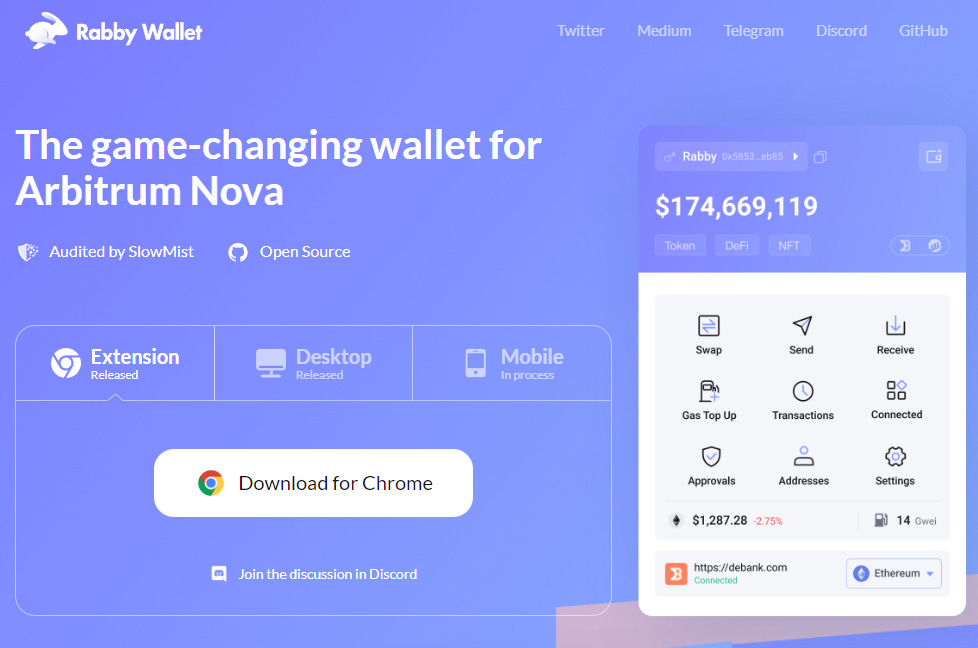
Short version: it’s fast to set up. Seriously? Yep. You can add it to Chrome or another Chromium-based browser, import a seed or create a new wallet, and then connect to popular networks. The UX is lean, with clear affordances for networks, assets, and connected sites. There are smart safety features like approval management that let you revoke permissions later, and a built-in swap aggregator for quick trades without leaving the extension. I like that—it avoids jumping tabs and losing context.
Why multi-chain matters (and how Rabby handles it)
Multi-chain isn’t just jargon. It’s the reality: users hold assets on Ethereum, BSC, Polygon, Arbitrum, Optimism, and more. Managing separate accounts across chains is a mess. Rabby treats chains as first-class citizens, making chain-switching obvious and reducing accidental transactions on the wrong network. My instinct said “finally,” because I’ve sent tokens to the wrong chain before—ugh, that hurt—and Rabby helps prevent that. Actually, wait—let me rephrase that: it doesn’t make mistakes impossible, but it adds friction where it counts, so you catch errors before you confirm.
Here’s what bugs me about some competitors: they normalize infinite approvals and bury it. Rabby surfaces active approvals and lets you revoke them in a few clicks. That’s super useful. It also offers a transaction simulation and gas insights so you can see what a tx will do before you tap confirm, which reduces dumb mistakes. On one hand some of these features are subtle; though actually they change long-term safety habits if you use them often.
Okay, practical note—if you want to download Rabby and try it yourself, go to https://sites.google.com/cryptowalletextensionus.com/rabby-wallet-download/ and follow the installer instructions there. The page walks you through browser options and how to import or create a wallet. I’m not being paid to say that—it’s just where I landed during testing, and the walkthrough was clear enough even for my slightly impatient self.
Security mechanics matter. Rabby stores keys locally like other extension wallets, which means your seed phrase is your responsibility. I’ll be honest: if you don’t back up your seed safely, no wallet will save you. Rabby does give helpful nudges though, and it tries to make dangerous actions more explicit. There’s also optional hardware wallet integration, which I recommend if you hold sizable positions. Small balances? You might be fine with software-only, but think twice before leaving funds in a browser extension indefinitely.
UX and features I actually used
First, the approval scanner. It told me about some long-forgotten approvals I had from a DEX test, and I revoked them in seconds. That felt good. Second, the built-in swap—fast, clean, and it shows route quality. Third, granular gas control and nice nonce management when you need to sequence transactions. These aren’t flashy, but they’re the sort of polish that reduces friction during real DeFi activity.
One caveat: not every token or Layer 2 is supported out of the box. You can add custom networks and tokens, sure, but that took a couple of manual steps for me. Not a dealbreaker—just a mild annoyance for power users who hop between niche chains. (oh, and by the way…) the team updates fairly often, so expect improvements, but also occasional UI shifts as they iterate.
Something else I liked: contextual warnings. When a contract requested an unusual allowance or a swap route looked suspiciously roundabout, Rabby flagged it. My gut said “skip,” and I did. That sort of nudge is exactly what average users need, because they won’t inspect calldata or transaction logs. On the flip side, advanced traders may find some of the prompts verbose, although you can tune settings to be less chatty.
Is Rabby safe enough for me?
Short answer: depends on your threat model. For everyday DeFi activity—trading, providing liquidity, staking—Rabby offers sensible defaults that reduce common risks. For high-value custody, pair it with a hardware wallet. My experience: combining Rabby with a ledger felt solid; the approval flows still made sense and hardware signing eliminated key exposure on the desktop.
On one hand, browser extensions inherently increase attack surface. On the other hand, Rabby’s interface and permission tools lower accidental-loss risk, which is often the bigger issue for casual users. Initially I thought hardware-only was the only safe way; but then I realized that usability matters—if safety is too hard, people do unsafe shortcuts. Rabby strikes a compromise: secure-by-default where possible, and flexible when you need advanced features.
FAQ
How do I install Rabby?
Grab the extension for your Chromium browser via the Rabby download page at https://sites.google.com/cryptowalletextensionus.com/rabby-wallet-download/, then follow the setup wizard to import or create a wallet. Back up your seed phrase offline—write it down, don’t screenshot it.
Can Rabby connect to hardware wallets?
Yes. Rabby supports Ledger and other hardware options for signing, which is recommended for larger balances and long-term storage.
Is Rabby open-source?
Parts of Rabby are open-source; check the official repo and documentation for the latest details. Open-source helps with trust, but also verify releases and checksums when possible.